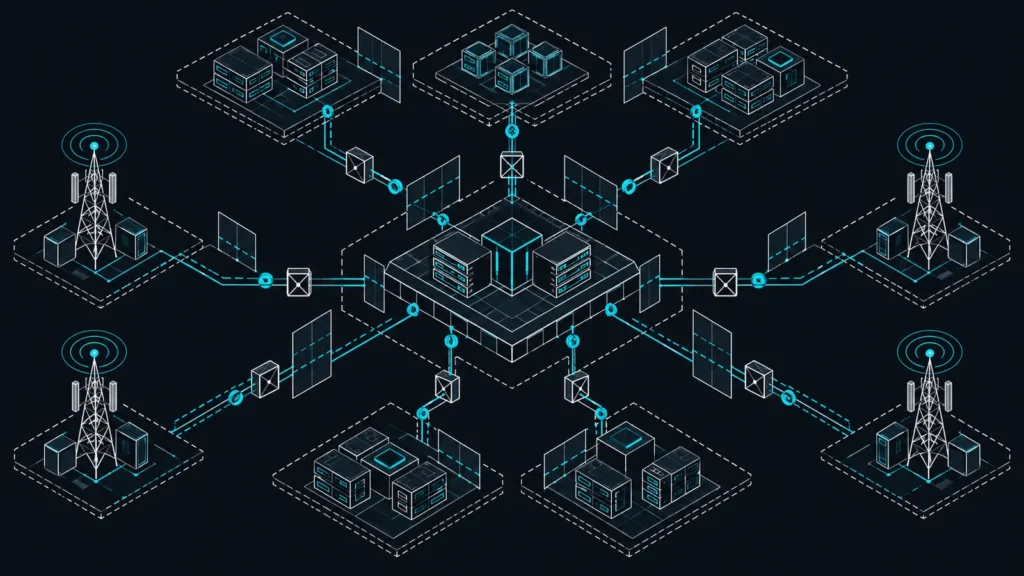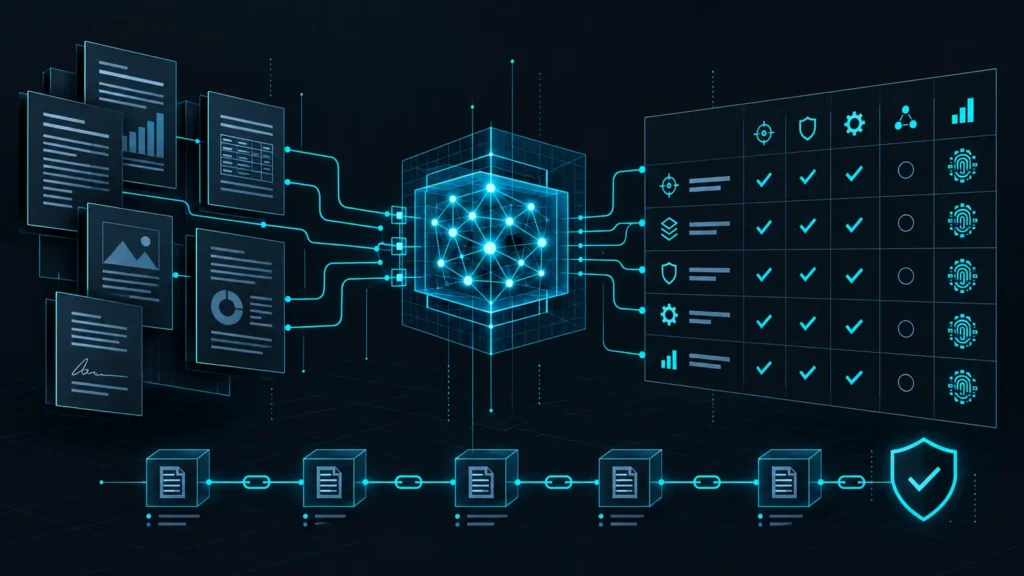

NIST is revising its IoT cybersecurity guidance around a practical question: should security requirements stop at the physical device, or follow the complete product through its companion application, cloud backend, update service, and manufacturer support chain? The pre-draft call for comments on SP 800-213A Revision 1 closed on October 15, 2026, and explicitly asked how the catalog should align with the broader IoT product scope in draft SP 800-213 Revision 1.
The revision is not yet a new catalog and should not be presented as a final standard. Security and procurement teams can still act now by treating every connected dependency as part of the product boundary. This guide turns the current NIST capability families and the revision questions into a practical acquisition, acceptance, and lifecycle audit.
Why the product boundary matters
An IoT device may collect sensor data and enforce local access controls, but the product often depends on other components. A mobile app may hold long-lived tokens. A cloud API may authorize commands. A vendor update service may decide which firmware reaches the device. A support portal may receive vulnerability reports and communicate end-of-life dates.
Auditing only the enclosure can therefore produce a clean device checklist while missing the paths that determine identity, remote administration, software integrity, telemetry, and incident response. NIST’s revision questions specifically mention mobile applications, backends, and tailored systems assembled from off-the-shelf components. That makes product-boundary mapping the first control, not an administrative afterthought.
| Product component | Security questions to answer | Useful evidence |
|---|---|---|
| Physical device | Is identity unique? Can unused interfaces be disabled? Are updates authenticated? | Architecture, hardening guide, update design, device inventory fields |
| Companion application | How are users and devices paired? Where are tokens stored? Which versions remain supported? | Authentication flow, mobile support policy, security test results |
| Cloud backend | Who can issue commands? Are tenant boundaries enforced? Can security events be exported? | API authorization model, logging schema, retention policy |
| Manufacturer support | How are vulnerabilities received, incidents disclosed, and end-of-life decisions communicated? | Disclosure policy, notification SLA, support and disposal commitments |
This expands the operational view described in IoT Security Risks in the Enterprise: segmentation and monitoring remain necessary, but procurement has to establish whether the entire product can support them.
What the current SP 800-213A catalog contains
The November 2021 final catalog separates technical device capabilities from non-technical supporting capabilities. It cross-references requirements to SP 800-53 controls and is intended to be used with SP 800-213 and the Risk Management Framework. The current technical families are:
- DI, Device Identification: logical and physical identifiers that support inventory and policy enforcement.
- DC, Device Configuration: controlled configuration of privileges, interfaces, authentication, and other settings.
- DP, Data Protection: cryptography, key management, secure storage, and protected transmission.
- LA, Logical Access to Interfaces: authentication, authorization, roles, external connections, and interface control.
- SU, Software Update: update capability and support for applying updates.
- CS, Cybersecurity State Awareness: event data, logging, reliable time, storage, protection, and response support.
- DS, Device Security: secure execution, communications, resource use, integrity, onboarding, and operation.
The supporting families cover documentation (DO), information and query reception (IQ), information dissemination (ID), and education and awareness (EA). These are easy to underweight because they are not firmware features, yet they determine whether an operator can report a flaw, receive an incident notice, understand security assumptions, maintain the product, and retire it safely.
Turn the catalog into procurement requirements
Define the complete product before scoring it
Draw the product boundary and list every component, trust relationship, data flow, administrative interface, external service, and responsible supplier. Include mobile and desktop applications, gateways, hubs, cloud APIs, identity providers, update infrastructure, and support portals. For a custom subsystem built from boards, sensors, and open-source services, record who assumes the manufacturer responsibilities for integration and support.
Write verifiable requirements, not feature wishes
“Supports secure updates” is too vague. State the security result and the evidence needed to accept it. For example: update packages must be authenticated before installation; rollback to a known vulnerable release must be blocked or explicitly controlled; failed updates must preserve a recoverable state; and the supplier must publish the supported update period.
Apply the same precision to identity, interface control, logging, vulnerability handling, and end of life. A requirement should name the scope, responsible party, acceptance evidence, operating owner, and failure response. This is where a framework-to-evidence approach is more useful than a generic yes-or-no questionnaire.
Separate supplier statements from observed evidence
A datasheet can establish a documented capability, but it does not prove that the deployed configuration uses it. Mark evidence as supplier-declared, independently assessed, or locally observed. Preserve document versions and collection dates. Acceptance testing should verify high-impact claims in a representative environment without connecting unapproved devices to production networks.
Make lifecycle obligations contractual
Require vulnerability intake, coordinated disclosure, notification channels, update delivery expectations, support duration, end-of-life notice, secure reset, data deletion, ownership transfer, and disposal instructions. An otherwise capable product can become unmanageable if the supplier ends updates without warning or cannot tell customers which versions are affected.
Acceptance and monitoring checklist
- Inventory the device, application, backend, update service, and support relationship as one product record.
- Use unique identities and prohibit shared default administrative credentials.
- Disable unnecessary physical and logical interfaces before production enrollment.
- Validate authenticated updates, failure recovery, rollback behavior, and supported release channels.
- Export security-relevant events with stable timestamps and test ingestion into monitoring workflows.
- Segment IoT traffic and alert on unexpected destinations, protocols, administrative access, and certificate changes.
- Reassess risk when a component, backend, ownership model, or support commitment changes.
- Maintain a documented isolation and retirement path for unsupported products.
For radio-connected products, pair this product audit with the network-layer detection concepts in NIST’s 5G false base station defense guide. Product assurance and network monitoring address different failure paths.
Hands-on lab: audit a synthetic IoT product matrix
This offline lab checks whether a procurement matrix covers the device, mobile application, cloud backend, and manufacturer support scopes. It uses fictional evidence names and does not connect to a device, vendor, or cloud service. The script was tested with Python 3.12.14.
Prerequisites
- Python 3.9 or later with only the standard library.
- A disposable local directory.
- No production evidence, credentials, customer data, or supplier-confidential documents.
mkdir -p iot-product-lab
cd iot-product-lab
cat > procurement-matrix.csv <<'CSV'
scope,family,requirement,status,evidence,owner
device,DI,Unique logical device identity,supported,device-security-datasheet.pdf,Device Engineering
device,LA,Disable unused local and network interfaces,supported,hardening-guide.pdf,Device Engineering
device,SU,Authenticated and rollback-protected updates,supported,update-architecture.pdf,Product Security
cloud_backend,CS,Export security events with reliable timestamps,supported,logging-integration.md,Cloud Operations
mobile_app,DO,Document supported app and operating system versions,partial,mobile-support-policy.pdf,Mobile Engineering
manufacturer_support,IQ,Receive and track vulnerability reports,supported,vulnerability-disclosure-policy.txt,Product Security
manufacturer_support,ID,Notify customers of security incidents,gap,,Incident Response
manufacturer_support,EA,Publish end-of-life and secure disposal guidance,gap,,Product Management
CSV
Create the validator
#!/usr/bin/env python3
import argparse, csv, sys

ALLOWED_STATUS = {"supported", "partial", "gap"}
REQUIRED_SCOPES = {"device", "mobile_app", "cloud_backend", "manufacturer_support"}
REQUIRED_FAMILIES = {"DI", "LA", "SU", "CS", "DO", "IQ", "ID", "EA"}

parser = argparse.ArgumentParser()
parser.add_argument("matrix")
parser.add_argument("--fail-on-gap", action="store_true")
args = parser.parse_args()
errors = 0
counts = {"supported": 0, "partial": 0, "gap": 0}
scopes, families, seen = set(), set(), set()

with open(args.matrix, newline="", encoding="utf-8") as handle:
    rows = csv.DictReader(handle)
    required = {"scope", "family", "requirement", "status", "evidence", "owner"}
    if not required.issubset(rows.fieldnames or []):
        print("ERROR matrix is missing required columns")
        sys.exit(2)

    for line, row in enumerate(rows, start=2):
        scope = row["scope"].strip()
        family = row["family"].strip()
        requirement = row["requirement"].strip()
        status = row["status"].strip().lower()
        evidence = row["evidence"].strip()
        owner = row["owner"].strip()
        key = (scope, family, requirement)
        if key in seen:
            print(f"ERROR line {line}: duplicate requirement {key}")
            errors += 1
            continue
        seen.add(key)
        scopes.add(scope)
        families.add(family)
        if status not in ALLOWED_STATUS:
            print(f"ERROR line {line}: invalid status {status!r}")
            errors += 1
            continue
        if not owner:
            print(f"ERROR line {line}: owner is required")
            errors += 1
            continue
        if status in {"supported", "partial"} and not evidence:
            print(f"ERROR line {line}: {status} requires evidence")
            errors += 1
            continue
        counts[status] += 1
        label = "PASS" if status == "supported" else "REVIEW"
        print(f"{label} {scope}/{family}: {requirement} [{status}]")

for scope in sorted(REQUIRED_SCOPES - scopes):
    print(f"ERROR missing scope: {scope}")
    errors += 1
for family in sorted(REQUIRED_FAMILIES - families):
    print(f"ERROR missing capability family: {family}")
    errors += 1

print(
    "SUMMARY "
    f"supported={counts['supported']} partial={counts['partial']} "
    f"gaps={counts['gap']} errors={errors}"
)
if errors:
    sys.exit(2)
if args.fail_on_gap and (counts["partial"] or counts["gap"]):
    sys.exit(1)
sys.exit(0)
Save the code as iot_product_audit.py, then run:
python3 iot_product_audit.py procurement-matrix.csvExpected output
PASS device/DI: Unique logical device identity [supported]
PASS device/LA: Disable unused local and network interfaces [supported]
PASS device/SU: Authenticated and rollback-protected updates [supported]
PASS cloud_backend/CS: Export security events with reliable timestamps [supported]
REVIEW mobile_app/DO: Document supported app and operating system versions [partial]
PASS manufacturer_support/IQ: Receive and track vulnerability reports [supported]
REVIEW manufacturer_support/ID: Notify customers of security incidents [gap]
REVIEW manufacturer_support/EA: Publish end-of-life and secure disposal guidance [gap]
SUMMARY supported=5 partial=1 gaps=2 errors=0
The result means the file is structurally valid while three items still require review. Add --fail-on-gap in CI or a procurement gate when any partial or gap status should produce exit code 1.
Troubleshooting and cleanup
missing scope: add at least one row for the named product component.missing capability family: add the family or document why it is out of scope before changing the local baseline.requires evidence: provide an approved evidence reference or change the row togap.duplicate requirement: merge the rows or make their component scope and requirement wording distinct.
cd ..
rm -r iot-product-lab
What security teams should do now
Do not wait for the revised catalog to define the product boundary in your environment. Keep the 2021 final SP 800-213A catalog as the current capability reference, use draft SP 800-213 Revision 1 to inform product-level risk discussions, and clearly label any local extensions. Revisit the matrix when NIST publishes the next SP 800-213A draft because family names, scope, mappings, or guidance may change.
The immediate win is operational: one product record, one accountable owner for every component, testable acquisition requirements, evidence-backed acceptance, continuous monitoring, and a funded exit path. That prevents a secure device from depending on an unsupported app, opaque cloud service, or silent manufacturer.
Primary sources
- NIST SP 800-213A Revision 1 pre-draft call for comments, published August 31, 2026; comments closed October 15, 2026.
- NIST SP 800-213 Revision 1 initial public draft, published June 24, 2026.
- NIST SP 800-213A final publication record.
- NIST SP 800-213A current catalog PDF.
- NIST revision announcement.