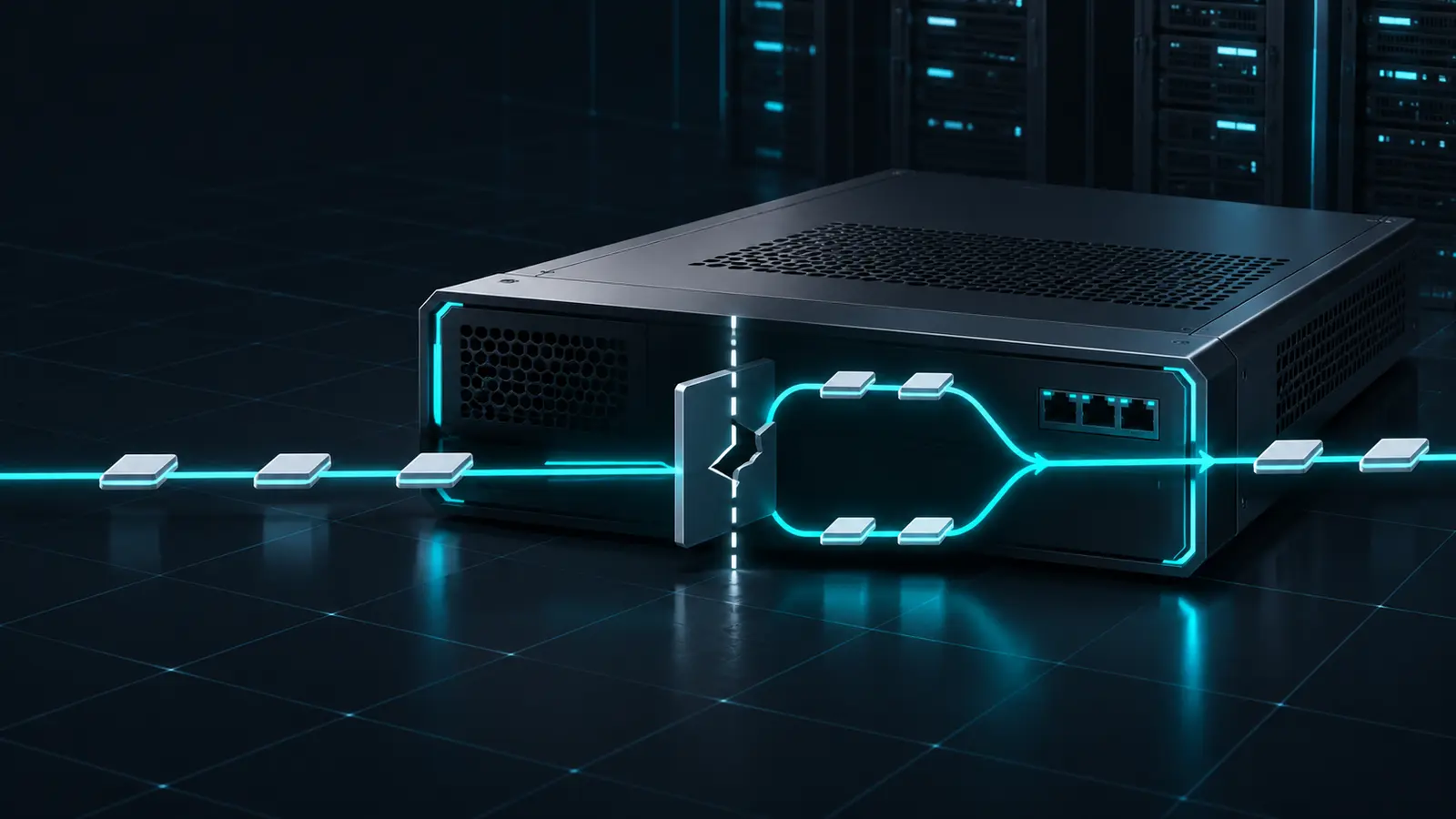
CISA added CVE-2026-19868 to its Known Exploited Vulnerabilities catalog on November 6, 2026. The flaw affects SonicOS SSL-VPN deployments that use SAML and can let someone with valid credentials for an alternate authentication method bypass SAML controls, including MFA enforced through SAML. SonicWall has released fixed Gen 7 and Gen 8 firmware, so defenders should treat this as an exposure-and-patch task, not a routine change-window item.
This guide explains the exact scope, the fixed releases, a practical response sequence, and a safe inventory lab. It does not reproduce the bypass or assume that every SonicWall authentication failure is related to this CVE.
CVE-2026-19868 at a glance
| Field | Verified detail |
|---|---|
| Product | SonicOS on Gen 7 and Gen 8 firewalls |
| Affected feature | SSL-VPN configured with SAML authentication |
| Attack condition | The actor has valid credentials for an alternate authentication method |
| Security impact | SAML controls and SAML-enforced MFA may be bypassed |
| Exploitation status | Added to the CISA KEV catalog on November 6, 2026 |
| Fixed Gen 7 release | SonicOS 7.3.4-7013 or later |
| Fixed Gen 8 release | SonicOS 8.2.3-8015 or later |
| CISA due date for federal civilian agencies | November 20, 2026 |
SonicWall advisory SNWLID-2026-0014 covers a broader group of SonicOS fixes. This article focuses on CVE-2026-19868 because CISA lists it as exploited. Do not transfer that exploitation status to the other issues in the advisory unless a primary source says so.
Why this authentication bypass matters
Many organizations put SAML and identity-provider MFA in front of remote access because the identity provider becomes the policy enforcement point. CVE-2026-19868 weakens that assumption when SonicOS also accepts an alternate authentication method. The important nuance is that the published description is not a universal, unauthenticated MFA break: it requires valid credentials for another supported method. That still matters because stolen, reused, dormant, or insufficiently protected credentials can become a path around the stronger SAML flow.
For an Internet-facing SSL-VPN, the practical risk is concentrated at the boundary between identity policy and appliance behavior. A user can appear to have passed a permitted login route while avoiding the route where the organization expected MFA and conditional-access checks to run. That makes a successful session more valuable to an attacker and makes identity-provider logs alone an incomplete source of truth.
What CISA’s KEV entry changes
A KEV entry is evidence that exploitation has occurred in the wild; it is not a prediction based only on severity. CISA lists ransomware use as unknown and says forensic triage is not required under its current BOD 26-04 entry. Those fields should not be read as proof that a private-sector appliance is clean. They describe the catalog’s current evidence and federal workflow.
Risk teams should therefore prioritize affected, Internet-exposed systems while preserving the distinction between confirmed exposure and confirmed compromise. This is the same operational discipline used for other exploited perimeter-device flaws, such as the site’s PAN-OS management-interface response guide.
Determine whether your firewall is affected
- Gen 7: SonicOS 7.3.3-7015 and earlier releases are in the affected range. The fixed line begins at 7.3.4-7013.
- Gen 8: SonicOS 8.2.2-8015 and earlier releases are in the affected range. The fixed line begins at 8.2.3-8015.
- Configuration: confirm whether SSL-VPN is enabled and whether SAML is an authentication option. Record every alternate method that can also issue a remote-access session.
- Exposure: confirm which WAN interfaces, addresses, and upstream services make SSL-VPN reachable. Do not rely on the inventory entry alone.
- Lifecycle: SonicWall says Gen 6 and older hardware has reached end of support and directs customers toward supported hardware. An unsupported appliance should not be treated as safe merely because this advisory names Gen 7 and Gen 8.
Take the version from the running appliance or a trusted central-management export. A firmware file downloaded to a repository does not prove it is installed. For high-availability pairs, record both members and verify the active and standby units after the change.
Response plan for security and network teams
1. Build a defensible inventory
Start with asset name, firewall generation, running SonicOS build, SSL-VPN exposure, SAML state, alternate authentication methods, owner, and maintenance window. Mark the source and collection time for each value. If one team owns the appliance and another owns the identity provider, create a single change record so the two sides do not validate in isolation.
2. Patch the perimeter first
Use SonicWall’s release and platform guidance to move Gen 7 systems to 7.3.4-7013 or later and Gen 8 systems to 8.2.3-8015 or later. Back up the configuration through the supported administrative workflow, confirm that the backup is recoverable, check high-availability sequencing, and stage an approved rollback plan. Avoid treating temporary access restrictions as a substitute for the fixed firmware.
After upgrade, verify the running build on every node, the health of HA synchronization, the SSL-VPN listener, and a controlled SAML login that actually triggers MFA. Also test the alternate authentication routes your organization intentionally keeps. The goal is not only to prove that the appliance boots, but to prove that the expected identity path is enforced.
3. Reduce authentication ambiguity
Inventory local and directory-backed VPN accounts, disable stale identities, and remove alternate authentication methods that are not operationally required. If an alternate path must remain, apply the strongest controls the product and identity architecture support. Review emergency accounts separately and document who can use them, how access is monitored, and when credentials were last rotated.
Credential rotation should be risk-based. Prioritize credentials that may have been exposed, shared, dormant, weakly protected, or observed in suspicious sessions. A blanket reset without session review can destroy useful timing evidence and create avoidable operational load.
4. Hunt across the appliance and identity provider
No public, authoritative indicator set was included in the primary sources reviewed for this article. Hunt behaviorally and keep the queries tied to fields that exist in your own logging pipeline:
- Successful SSL-VPN sessions without the corresponding SAML and MFA event expected for that user and time window.
- Use of an alternate authentication method by an account that normally uses SAML.
- Remote-access sessions from new source networks, unusual geographies, impossible travel, or outside the user’s established working pattern.
- Concurrent sessions, unexpected session duration, or access to unusual internal resources after VPN authentication.
- Administrative changes to SSL-VPN, SAML, local users, groups, certificates, logging, or retention around suspicious sessions.
Preserve original logs before normal retention removes them. Correlate firewall, identity-provider, RADIUS or directory, endpoint, DNS, and internal authentication records using normalized timestamps. If you find a suspicious session, scope what the account reached rather than stopping at the login event.
Hands-on lab: classify a SonicOS inventory safely
This lab runs entirely on an analyst workstation. It does not scan, authenticate to, or modify a firewall. Its purpose is to turn a small CSV export into a repeatable patch queue.
Prerequisites and isolated environment
- Python 3.9 or later on a non-production workstation.
- A new empty directory containing only the lab files.
- Inventory data collected through an approved management export or manual review. Do not place passwords, API tokens, public IP addresses, or configuration backups in the CSV.
Create inventory.csv:
asset,generation,version,saml_sslvpn
edge-paris,7,7.3.3-7015,yes
edge-rabat,7,7.3.4-7013,yes
edge-lab,8,8.2.2-8015,no
edge-unknown,8,unknown,yes
Save the following as sonicos_inventory_check.py:
#!/usr/bin/env python3
import csv, re, sys

FIXED = {"7": (7, 3, 4, 7013), "8": (8, 2, 3, 8015)}

def parse(value):
    match = re.fullmatch(r"s*(d+).(d+).(d+)-(d+)s*", value)
    return tuple(map(int, match.groups())) if match else None

with open(sys.argv[1], newline="", encoding="utf-8") as handle:
    rows = csv.DictReader(handle)
    print("asset,status,saml_sslvpn,reason")
    for row in rows:
        gen = row["generation"].strip().lower().replace("gen", "")
        version = parse(row["version"])
        saml = row["saml_sslvpn"].strip().lower()
        if gen not in FIXED or version is None or saml not in {"yes", "no"}:
            status, reason = "REVIEW", "confirm generation, version, and SAML state"
        elif version >= FIXED[gen]:
            status, reason = "FIXED", "at or above the published fixed release"
        else:
            status, reason = "PATCH", "below the published fixed release"
        print(f'{row["asset"]},{status},{saml},{reason}')
Run the classifier:
python3 sonicos_inventory_check.py inventory.csv | tee assessment.csvExpected output:
asset,status,saml_sslvpn,reason
edge-paris,PATCH,yes,below the published fixed release
edge-rabat,FIXED,yes,at or above the published fixed release
edge-lab,PATCH,no,below the published fixed release
edge-unknown,REVIEW,yes,confirm generation, version, and SAML state
The script deliberately flags an old build even when SAML is marked no. The same SonicWall advisory contains other fixes, and configuration can change. Use the SAML column to prioritize CVE-2026-19868 exposure, not to excuse an outdated appliance.
Troubleshooting and cleanup
- If Python reports missing columns, keep the exact header names shown in the sample.
- If a build uses a different format, leave it for manual review instead of forcing a comparison.
- Reconcile every
PATCHandREVIEWrow with the live appliance before scheduling work. - When the assessment is recorded in the approved ticketing system, delete the lab directory if it contains operational asset names.
cd ..
rm -r sonicwall-cve-2026-19868-lab
Review the directory name and current path before running the cleanup command. Use your organization’s secure deletion and retention rules if the inventory is sensitive.
Validation checklist after patching
- Every Gen 7 node reports 7.3.4-7013 or later; every Gen 8 node reports 8.2.3-8015 or later.
- High-availability members are healthy and synchronized.
- A controlled SAML SSL-VPN login reaches the identity provider and requires the expected MFA step.
- Approved alternate authentication paths behave as documented; unnecessary paths are disabled.
- Firewall and identity-provider timestamps align, and the SIEM receives the events needed to correlate a VPN session with its SAML transaction.
- Change evidence includes the before-and-after build, validation results, owner, and completion time.
Once the urgent work is complete, fold the lessons into normal perimeter hygiene: restrict management exposure, remove unused services, centralize logs, test recovery, and make authentication-path reviews part of each firewall change. The broader firewall configuration best-practices guide provides a useful baseline.
Common mistakes to avoid
- Calling it an unauthenticated universal MFA bypass. The published attack condition includes valid credentials for an alternate authentication method.
- Checking only the identity provider. A bypassed SAML route may not produce the event sequence defenders expect.
- Upgrading only the active HA member. An unpatched standby can become the active perimeter during failover.
- Using the CISA due date as a private-sector safe date. It is a federal remediation deadline, not an assurance that waiting is safe.
- Inventing indicators from generic VPN activity. Keep hypotheses separate from confirmed IOCs and document the logic behind each query.
Conclusion
CVE-2026-19868 is operationally important because it sits where remote access, alternate credentials, SAML, and MFA meet. SonicWall has published fixed firmware, and CISA has confirmed exploitation through the KEV catalog. The defensible response is straightforward: inventory the running builds and authentication paths, patch every supported Gen 7 and Gen 8 node, validate SAML and alternate-login behavior, then correlate appliance and identity logs for suspicious sessions.
Do not stop at a version screenshot. Close the loop with post-change authentication tests, HA verification, evidence retention, and an owner for every unresolved inventory row.
Primary references
- SonicWall PSIRT, SNWLID-2026-0014, published November 6, 2026.
- SonicWall, SonicOS 7.3.4 and 8.2.3 Security Advisory, published November 3 and updated November 6, 2026.
- CISA Known Exploited Vulnerabilities Catalog, CVE-2026-19868, added November 6, 2026.
- NIST NVD, CVE-2026-19868, published November 6, 2026.