Debian administrators running container workloads on Trixie have a fresh runc update to deploy. Debian Security Advisory DSA-6656-1, dated 25 November 2026, fixes three vulnerabilities in the OCI runtime that can expose host resources, disrupt a host, or permit container escape under the right conditions.
The fixed Debian package is 1.1.15+ds1-2+deb13u1. That version string matters: Debian has backported the fixes into its supported package, so comparing it only with a newer upstream runc release number will produce the wrong conclusion. The practical job is to identify which hosts actually use Debian’s runc package, patch them, and review the container configurations that make these bugs more dangerous.
What DSA-6656-1 fixes
The Debian update covers CVE-2025-31133, CVE-2025-52565, and CVE-2026-41579. The first two are high-impact race and mount-handling issues disclosed by the runc project in November 2025. The third is a lower-severity symlink issue disclosed in June 2026. The vulnerabilities are not newly discovered this week; the current development is Debian’s security backport for Trixie.
CVE-2025-31133: masked-path mount abuse
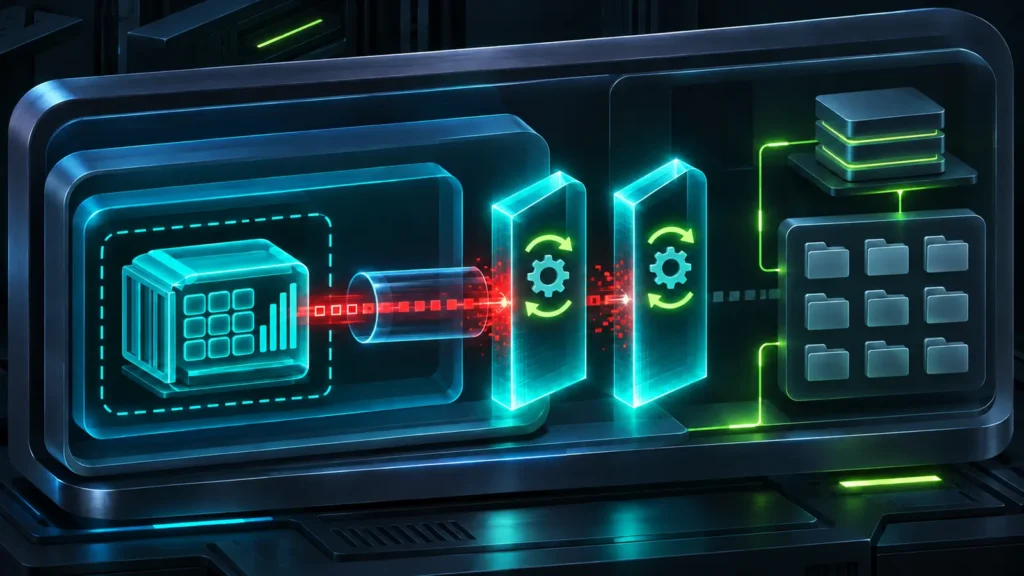
OCI runtimes use maskedPaths to hide sensitive files and directories inside a container. For files, runc historically bind-mounted the container’s /dev/null over the protected target. The upstream advisory explains that runc did not adequately verify that the source was still the expected device. An attacker able to manipulate container state during a race could substitute a symlink or remove the source at the critical moment.
One attack path could turn the masking operation into an unintended mount gadget. Depending on the chosen target and container configuration, this could expose host information, make sensitive procfs controls writable, crash the host, or support an escape. Another path could cause runc to skip masking a target after an unexpected ENOENT, exposing information that the runtime intended to conceal.
CVE-2025-52565: console bind-mount races
This issue affects the bind mount that maps a pseudo-terminal to /dev/console for containers that allocate a console. Insufficient validation could let an attacker redirect the operation to a path that should have been masked or read-only. The mount occurs before runc applies its normal maskedPaths and readonlyPaths protections.
The upstream analysis describes possible access to procfs controls such as /proc/sysrq-trigger or /proc/sys/kernel/core_pattern. In a vulnerable configuration, those paths can provide a route to host denial of service or privileged code execution. This is not a network-only attack: an adversary needs influence over container creation or a malicious workload, and the exploit depends on timing and runtime configuration.
CVE-2026-41579: malicious /dev symlink handling
When preparing a container root filesystem, older runc code used path-based remove and symlink operations while initializing /dev. A malicious image could make /dev a symlink and redirect a limited set of file operations into a pre-existing host directory. The upstream project rates this issue low severity and describes its practical integrity impact as constrained.
Runtime context is especially important here. The runc advisory says Docker’s image handling places a read-only top layer over a malicious /dev symlink, blocking this specific path. Podman and containerd configurations using runc may remain affected. That distinction applies to CVE-2026-41579 only; it should not be generalized into a claim that Docker mitigates every issue in DSA-6656-1.
Which systems should be prioritized
Start with Debian 13 Trixie hosts that run Docker Engine, containerd, Podman with runc, Kubernetes nodes, CI runners, build farms, or platforms that accept images from tenants or external pipelines. A host becomes more urgent when several of these conditions overlap:
- Untrusted users can start containers, submit builds, or control OCI specifications.
- Containers run as root without a user namespace separating container root from host root.
- Workloads use privileged mode, broad capabilities, custom mounts, or weak seccomp and LSM policies.
- Build infrastructure runs third-party Dockerfiles or parallel BuildKit/buildx jobs.
- Registry controls allow unsigned, unreviewed, or mutable images into production.
- The host is shared by workloads from different trust domains.
A single-tenant host that runs only curated images is not automatically safe, but its attack path is narrower than a multi-tenant build worker that lets users supply images and container settings.
Patch Debian Trixie correctly
On Trixie, install runc version 1.1.15+ds1-2+deb13u1 or later from Debian security repositories:
sudo apt update
sudo apt install --only-upgrade runc
dpkg-query -W -f='${binary:Package}\t${Version}\n' runc
apt-cache policy runc
Do not replace the distribution package with an arbitrary upstream binary simply because its semantic version looks newer. That can break package ownership, runtime integration, and future security updates. If runc arrived through a vendor appliance, Kubernetes distribution, managed node image, or container-platform bundle, use that supplier’s supported update path and confirm how it consumes the Debian package.
runc is a command-line runtime invoked by higher-level managers rather than a long-running daemon in the usual deployment model. Updating the binary protects subsequent lifecycle operations that call it. Follow your platform’s maintenance procedure for containerd, Docker, CRI-O, Podman, or the node image, and check whether the package manager reports that a service restart or host reboot is required. Do not assume a reboot is necessary, but do not skip the platform-specific check.
Hardening that reduces container-escape risk
Use user namespaces or rootless operation
The runc maintainers repeatedly recommend user-namespaced containers, with host root excluded from the container’s UID mapping. This limits what a process that appears to be root inside the container can access on the host. Rootless containers can reduce the runtime’s host privileges further when the workload and platform support them.
Keep processes non-root and enable no-new-privileges
Where user namespaces are not available, run application processes as a non-root UID and set noNewPrivileges so setuid or file capabilities cannot silently raise privileges. Remove unneeded Linux capabilities and avoid privileged containers. These controls are useful defense in depth, not substitutes for the package update.
Control image and build inputs
Require immutable digests for production images, verify signatures or provenance where available, and separate untrusted build jobs from production nodes. Scan image configuration as well as packages: unusual /dev contents, unexpected mounts, privileged flags, and attempts to alter runtime-generated device paths deserve review.
The broader boundary lesson also appears in our Docker Desktop and WSL isolation guide. For management-plane exposure rather than runtime escape, see the Portainer SSRF and egress review.
Safe lab: check a Debian host without running a container
Prerequisites: an authorized Debian Trixie host or isolated clone, shell access, and permission to query installed packages. The commands below are read-only. They do not start containers, change repositories, or attempt exploitation. They have not been tested against your environment.
# Show the installed Debian package version.
dpkg-query -W -f='${binary:Package}\t${Version}\n' runc 2>/dev/null

# Show the candidate version offered by configured repositories.
apt-cache policy runc

# Perform a Debian-aware version comparison.
installed="$(dpkg-query -W -f='${Version}' runc 2>/dev/null)"
if [ -n "$installed" ] && dpkg --compare-versions "$installed" ge '1.1.15+ds1-2+deb13u1'; then
  echo "runc package meets the DSA-6656-1 fixed version"
else
  echo "runc is absent or below the DSA-6656-1 fixed version"
fi

# Identify common higher-level runtimes without changing them.
command -v docker containerd podman crictl runc 2>/dev/null
Expected output: a patched Trixie host reports runc at 1.1.15+ds1-2+deb13u1 or a later Debian version, and the comparison prints that the fixed version is met. apt-cache policy should show the security-repository candidate. The last command indicates which runtime clients or binaries are present; it does not prove which binary path a service actually invokes.
Troubleshooting: if dpkg-query prints nothing, runc may not be installed as a Debian package, may be embedded in a vendor bundle, or may live inside a managed node image. Check the platform’s package inventory rather than copying in a binary. If the installed version is fixed but the candidate is older, review repository priorities and mirrors before changing anything. If the host is Debian 12 or another distribution, use its security tracker and vendor-fixed version instead of applying the Trixie comparison.
Cleanup: none is required. The commands only read package metadata and executable paths.
Detection and retrospective review
The upstream advisories do not provide universal network indicators or a single malicious file hash. These flaws are exercised during local container setup, so investigation must use host and orchestration evidence. If untrusted workloads ran while a host was vulnerable, review:
- Container creation and build events, especially failed or rapidly repeated starts.
- Images and Dockerfiles supplied by external users or mutable registry tags.
- Privileged workloads, console allocation, custom mounts, shared mount namespaces, and rootful containers.
- Kernel, auditd, containerd, Docker, Podman, and Kubernetes node logs around suspicious lifecycle events.
- Unexpected host instability, core-pattern changes, procfs writes, new privileged processes, or unexplained changes to host files.
Absence of those signs is not proof that exploitation did not occur, especially when audit coverage is weak. Use exposure and workload trust to decide whether the node should be rebuilt, credentials rotated, or adjacent systems investigated.
Conclusion
DSA-6656-1 gives Debian Trixie operators a clear fixed package: 1.1.15+ds1-2+deb13u1. Patch first, then confirm which higher-level runtimes use the package and where untrusted users can influence container creation. User namespaces, non-root workloads, no-new-privileges, restricted capabilities, and controlled image provenance all narrow the blast radius, but none remove the need to install Debian’s update.
Primary references
- Debian Security Advisory DSA-6656-1, dated 25 November 2026.
- Debian Security Tracker entry for DSA-6656-1, including the fixed Trixie package version.
- runc advisory for CVE-2025-31133.
- runc advisory for CVE-2025-52565.
- runc advisory for CVE-2026-41579.