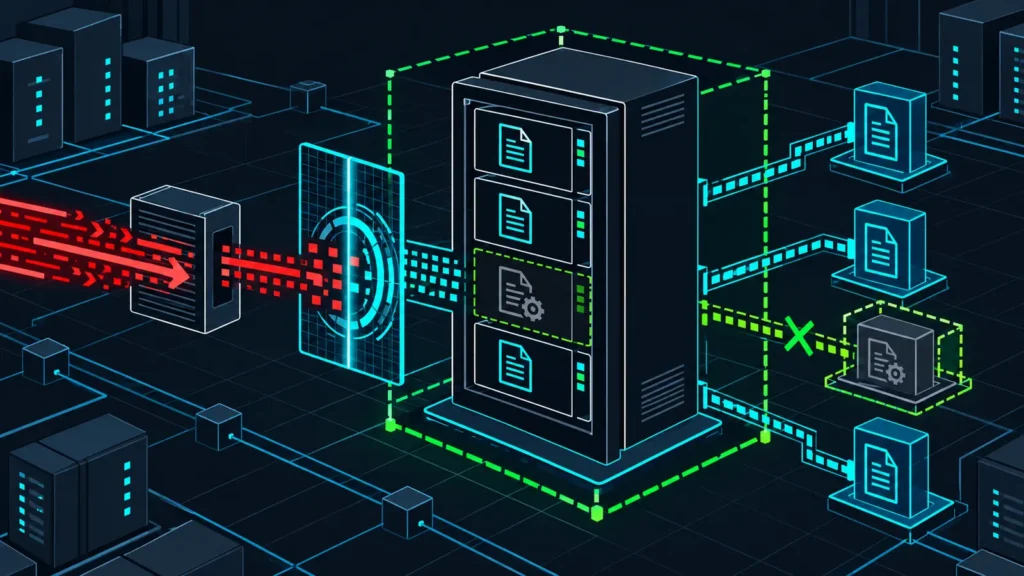
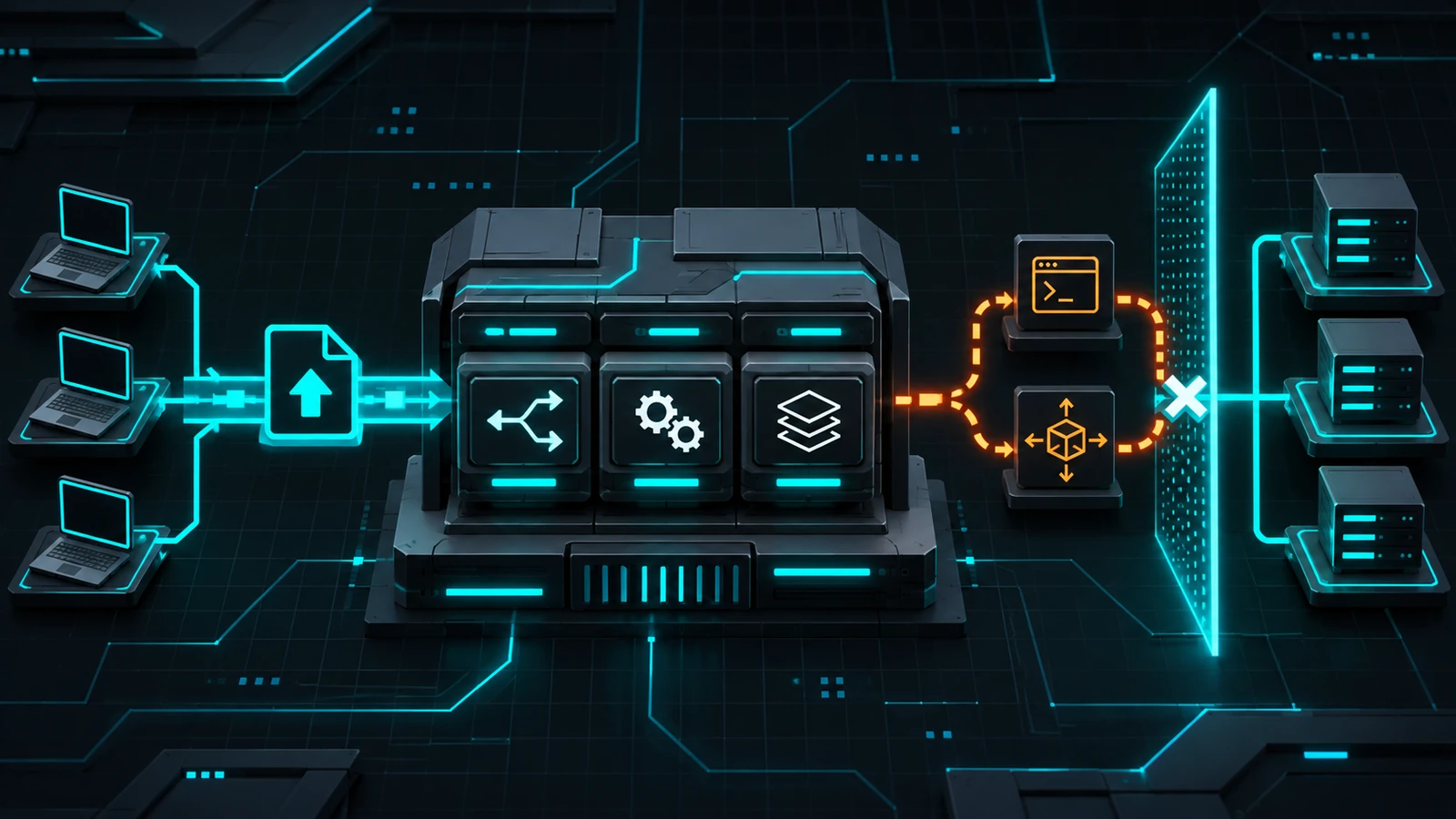
IBM published coordinated security bulletins on November 5, 2026 for IBM API Connect V10 and V12 OnPrem. The update addresses a broad vulnerability set, including an authenticated arbitrary-code-execution flaw in uploaded content and a high-impact server-side request forgery issue. There is no vendor workaround, so defenders should identify affected appliances, plan an expedited upgrade, and investigate suspicious activity rather than treating authentication as a sufficient barrier.
Defender’s summary: V10 releases 10.0.8.0 through 10.0.8.12 should move to 10.0.8.13. V12 OnPrem releases 12.1.0.0 through 12.1.1.2 should move to 12.1.1.3. IBM lists no workaround for either bulletin.
What IBM disclosed
The two IBM bulletins cover many findings across authentication, authorization, input validation, path handling, cryptography and request processing. This guide focuses on two vulnerabilities that illustrate why an API-management control plane deserves urgent attention:
- CVE-2026-17399: IBM says a remote authenticated attacker can execute arbitrary code because uploaded content is not validated sufficiently before processing. IBM maps the issue to CWE-434 and assigns a CVSS 3.1 base score of 9.9.
- CVE-2026-17296: IBM describes an authenticated SSRF vulnerability that can expose sensitive information. IBM assigns a CVSS 3.1 base score of 9.6.
| Release track | Affected versions | Fixed release | Vendor workaround |
|---|---|---|---|
| API Connect V10 | 10.0.8.0–10.0.8.12 | 10.0.8.13 | None |
| API Connect V12 OnPrem | 12.1.0.0–12.1.1.2 | 12.1.1.3 | None |
These ranges and fixed versions come directly from IBM’s V10 and V12 bulletins. The bulletins do not say that the flaws are being exploited in the wild, and the primary sources reviewed for this article do not provide a public exploitation claim. That absence is not proof of safety; it simply means responders should avoid presenting an unverified exploitation status as fact.
Why authenticated RCE is still an urgent control-plane risk
The word authenticated can lead to under-prioritization. In an API platform, however, credentials are distributed among administrators, developers, automation identities and integration pipelines. A stolen low-privilege account, an exposed token, or an over-permissioned CI job can turn a post-authentication weakness into a practical entry point.
CVE-2026-17399 matters because upload and import workflows often sit near privileged processing components. IBM’s description says insufficient validation of uploaded content can lead to code execution on the server. Defenders should not infer a specific exploit chain beyond that statement, but the possible impact is clear: code running in a management component can threaten configuration integrity, stored secrets and the availability of gateways managed by the platform.
Prioritize internet-reachable management or developer portal surfaces, tenants with external developer access, and environments where automation can upload definitions or customization packages. Review role assignments before the maintenance window; patching closes the product flaw, but it does not remove excessive privileges or revoke stolen credentials.
How SSRF changes the trust boundary
Server-side request forgery makes the vulnerable server send a request chosen or influenced by an attacker. The request originates from a trusted platform zone rather than the attacker’s workstation, so ordinary perimeter controls may not see it as hostile. In API infrastructure, that can expose internal administration endpoints, service discovery data or cloud instance metadata when network policy allows the path.
For CVE-2026-17296, IBM confirms an authenticated SSRF condition and sensitive-information impact. The bulletin does not enumerate every reachable target, so organizations should model exposure from their own topology. Ask what the API Connect management and portal components can reach, which destinations bypass proxies, and whether link-local, loopback, RFC 1918 and internal DNS destinations are denied where they are unnecessary.
This is also a useful point to revisit the site’s OWASP web application security guide. SSRF defenses are strongest when URL validation, DNS resolution, egress filtering and application authorization reinforce each other rather than relying on one parser check.
Response plan for security and platform teams
1. Build an authoritative inventory
- Record every management, analytics, developer portal and gateway deployment, including disaster-recovery and lab environments.
- Capture the release track and exact version from the product interface or supported administrative tooling.
- Mark management-plane exposure, authentication provider, environment owner and maintenance window.
- Reconcile the list with DNS, load balancers, Kubernetes or OpenShift inventories, certificates and CMDB records so dormant nodes are not missed.
2. Patch in a controlled sequence
Follow IBM’s release-specific instructions and supported upgrade path. Start with a representative non-production environment, take supported backups, verify cluster health, and test sign-in, API publication, portal access, analytics and gateway traffic before production rollout. Preserve logs outside the appliance before maintenance so an attacker cannot erase the only useful evidence.
Do not use the inventory script below as an upgrade tool. It only labels versions. Product topology, prerequisites, backups and rollback requirements must come from IBM documentation and your environment’s runbook.
3. Reduce exposure while the change is prepared
- Restrict management interfaces to a VPN, bastion or approved administration network.
- Review developer and service accounts; disable stale users and rotate credentials that may have been exposed.
- Apply egress policy so API Connect components cannot reach instance metadata, loopback, link-local or internal administration networks unless required.
- Temporarily tighten upload/import privileges and monitor unusual package, definition or customization activity.
- Alert on new privileged roles, unexpected identity-provider changes and configuration exports.
4. Hunt before declaring the incident closed
Search management, portal, identity-provider, reverse-proxy, DNS and egress logs for anomalies during your available retention window. Useful signals include uploads by unusual accounts, repeated failed imports followed by success, requests to internal-only hostnames, link-local destinations, unexpected outbound protocols, new API or portal artifacts, privileged role changes and administrative activity outside normal windows.
A match is an investigation lead, not proof of exploitation. Correlate account, source IP, object name, destination, user agent and timestamp. If evidence suggests code execution or credential access, isolate the affected management plane, preserve forensic data and rotate secrets reachable from it. The containment logic is similar to the evidence-first process described in the site’s PHP2Shell emergency patching guide.
Hands-on lab: classify API Connect versions safely
This local-only lab helps responders turn a CSV inventory into a patch queue. It does not contact appliances, exploit vulnerabilities or change systems. Run it on a workstation with Python 3.9 or newer using sanitized inventory data.
Prerequisites and isolated setup
mkdir -p apic-inventory-lab
cd apic-inventory-lab
python3 --version
Create inventory_api_connect.py:
#!/usr/bin/env python3
import csv, sys

FIXED = {"v10": (10, 0, 8, 13), "v12": (12, 1, 1, 3)}

def version(value):
    parts = value.strip().lower().lstrip("v").split(".")
    if not parts or any(not item.isdigit() for item in parts):
        raise ValueError(f"invalid version: {value}")
    parsed = tuple(int(item) for item in parts)
    return parsed + (0,) * (4 - len(parsed))

with open(sys.argv[1], newline="", encoding="utf-8") as handle:
    rows = csv.DictReader(handle)
    print("STATUStASSETtTRACKtVERSIONtREASON")
    for row in rows:
        track = row["track"].strip().lower()
        try:
            if track not in FIXED:
                status, reason = "REVIEW", "unknown release track"
            elif version(row["version"]) < FIXED[track]:
                status, reason = "PATCH", "below fixed release"
            else:
                status, reason = "FIXED", "at or above fixed release"
        except ValueError as error:
            status, reason = "REVIEW", str(error)
        print(f"{status}t{row['asset']}t{track}t{row['version']}t{reason}")
Create inventory.csv with non-sensitive sample data:
asset,track,version,exposed,owner
apic-prod-eu,v12,12.1.1.2,yes,platform
apic-stage,v12,12.1.1.3,no,platform
apic-prod-us,v10,10.0.8.12,yes,api-team
apic-dr,v10,10.0.8.13,no,api-team
apic-lab,unknown,dev,no,research
Run the classifier
python3 inventory_api_connect.py inventory.csvExpected output:
STATUS  ASSET         TRACK  VERSION     REASON
PATCH   apic-prod-eu  v12    12.1.1.2    below fixed release
FIXED   apic-stage    v12    12.1.1.3    at or above fixed release
PATCH   apic-prod-us  v10    10.0.8.12   below fixed release
FIXED   apic-dr       v10    10.0.8.13   at or above fixed release
REVIEW  apic-lab      unknown dev         unknown release track
Replace only the sample rows with verified values from your inventory. Treat PATCH as a remediation queue, FIXED as a prompt for post-upgrade validation rather than a guarantee of safety, and REVIEW as incomplete data that needs a human owner.
Troubleshooting and cleanup
KeyError: 'track'means the CSV header is missing or misspelled.- An
invalid versionresult means the field is not a dotted numeric version. Confirm it in the product rather than guessing. - If Excel changes the version format, export as UTF-8 CSV and inspect the file in a text editor.
cd ..
rm -rf apic-inventory-lab
Post-upgrade validation checklist
- Confirm every node reports the intended fixed release and the cluster is healthy.
- Test administrative sign-in, role enforcement, API publication, portal access, analytics and gateway routing.
- Reapply or verify network restrictions; do not remove egress controls simply because the patch is installed.
- Compare identities, roles, uploaded artifacts and configuration against the pre-change baseline.
- Continue monitoring for delayed use of credentials or access tokens that may have been exposed before remediation.
Conclusion
The November 5 IBM API Connect bulletins are not a single-CVE patch note; they are a broad control-plane security update. CVE-2026-17399 and CVE-2026-17296 show two dangerous paths—uploaded content reaching server-side processing and trusted infrastructure reaching unintended destinations. Because IBM provides no workaround, the defensible response is to inventory precisely, upgrade to 10.0.8.13 or 12.1.1.3 as appropriate, preserve and examine evidence, and keep identity and egress controls in place after the maintenance window.
Primary references
- IBM V10 security bulletin — published November 5, 2026.
- IBM V12 OnPrem security bulletin — published November 5, 2026.
- IBM API Connect v12.1.1.3 release and fix information.
- NVD record for CVE-2026-17399.
- NVD record for CVE-2026-17296.